Top Digital Marketing Skills That Companies Are Hiring For
Why Digital Marketing Skills Are in High Demand
As businesses continue to shift their focus toward online platforms, the demand for skilled digital marketers is growing rapidly. Companies are looking for professionals who can help them reach target audiences, increase brand visibility, generate leads, and drive sales through digital channels. To succeed in this competitive industry, marketers need a combination of technical, analytical, and creative skills.
Some of the most sought-after digital marketing skills include Search Engine Optimization (SEO), Content Marketing, Social Media Marketing, Pay-Per-Click (PPC) Advertising, Email Marketing, Data Analytics, and Marketing Automation. Additionally, knowledge of AI-powered marketing tools and strong communication skills are becoming increasingly valuable. By developing these in-demand skills, aspiring marketers can improve their career prospects and meet the evolving needs of modern businesses.
What Companies Expect from a Digital Marketing Professional
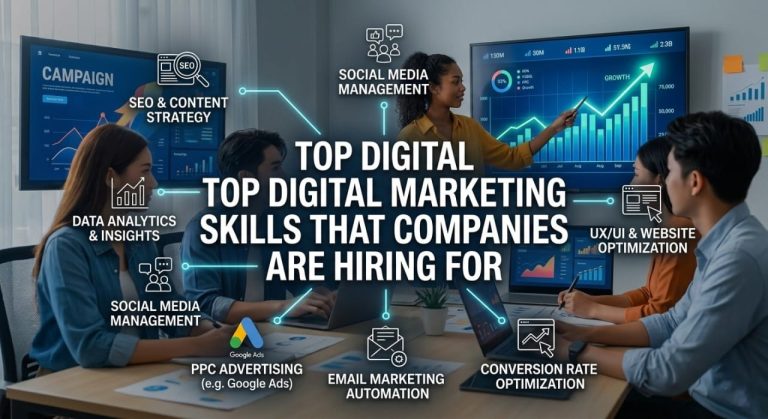
Companies today look for digital marketing professionals who possess a combination of SEO, content marketing, social media marketing, paid advertising, email marketing, and analytics skills. Employers prefer candidates who can increase website traffic, generate quality leads, improve brand visibility, and measure campaign performance effectively. A strong digital marketer should understand customer behavior, create engaging content, manage advertising campaigns, analyze data, and adapt to the latest marketing trends. Professionals who can combine creativity with data-driven decision-making are highly valued because they help businesses achieve measurable growth and stay competitive in the digital marketplace.
Search Engine Optimization (SEO)
SEO remains one of the most valuable digital marketing skills. Companies want professionals who can improve website visibility on search engines like Google. SEO involves keyword research, on-page optimization, technical SEO, link building, and content optimization to drive organic traffic and improve search rankings.
What companies expect
Keyword research and search intent analysis
On-page optimization (titles, headings, internal links, metadata)
Basic technical SEO (crawlability, site speed, indexing)
Content optimization for rankings and engagement
Content Marketing
Quality content is the foundation of successful digital marketing. Businesses need marketers who can create engaging blog posts, articles, videos, infographics, and social media content. Strong content marketing skills help brands attract, educate, and convert potential customers.
What companies expect
Blog and article writing
Content planning and editorial calendars
Audience-focused messaging
Content performance analysis
Social media marketing
Social media platforms have become powerful marketing channels. Companies seek professionals who can manage brand presence, create engaging campaigns, increase audience engagement, and analyze performance across platforms such as Instagram, Facebook, LinkedIn, and X.
What companies expect
Platform-specific content creation
Community management and engagement
Campaign planning and scheduling
Performance tracking and reporting
Pay-Per-Click (PPC) Advertising
PPC advertising helps businesses generate immediate traffic and leads. Skills in platforms like Google Ads and social media advertising are highly valued. Marketers who can create effective ad campaigns, manage budgets, and optimize conversions are in high demand.

What companies expect
Google Ads campaign setup and optimization
Keyword targeting and bidding basics
Ad copy and creative testing
Budget management and ROI tracking
Email marketing
Despite the rise of new marketing channels, email marketing remains one of the most effective ways to nurture customer relationships. Companies look for professionals who can create personalized campaigns, improve open rates, and drive customer engagement through strategic email communication.

What companies expect
Audience segmentation
Campaign creation and scheduling
Basic automation workflows
Open, click, and conversion rate analysis
Data Analytics
Modern marketing decisions are driven by data. Employers value marketers who can analyze website traffic, campaign performance, and customer behavior using tools such as Google Analytics. Data-driven insights help businesses improve marketing strategies and maximize ROI.
What companies expect
Data collectionand interpertation.
Customer behavior analysis
Trend identification and forecasting
Dashboard creation and data visualization
AI and Digital Marketing Tools
Artificial Intelligence is transforming the marketing industry. Companies are increasingly seeking professionals who can use AI-powered tools for content creation, customer insights, automation, personalization, and campaign optimization. Understanding AI applications in marketing can provide a significant competitive advantage.
What companies expect
Platform-specific content creation
Community management and engagement
Campaign planning and scheduling
Performance tracking and reporting